Executive Function Skills: What They Are and Why They Matter
Executive function skills are the mental and emotional processes that allow you to
plan, organize, focus, regulate your emotions,
remember important information, and follow through on tasks. These skills act like
the operating system of the brain—supporting everything from decision-making and
time management to communication, relationships, and daily routines.
When executive function skills are strong, life feels more manageable: you can stay organized,
shift between tasks, manage stress, and take action with clarity and confidence.
When they’re challenged, even simple tasks can feel overwhelming, and motivation,
consistency, and emotional balance become harder to maintain.
Why Executive Function Skills Matter in Coaching
Executive function challenges are not character flaws—they are often the result of a
dysregulated nervous system, long-term stress, or patterns rooted in safety and
survival responses. This is why traditional productivity tools often fail: they try to change behavior
without supporting the underlying physiology that drives it.
Through polyvagal-informed, nervous-system-based coaching, we work with your body’s
regulation system—not against it. When the nervous system becomes more regulated,
executive function capacity naturally increases. This creates lasting change,
not temporary fixes.
Coaching in this way helps you:
- Reduce overwhelm and reactivity
- Improve focus, organization, and follow-through
- Strengthen emotional regulation
- Build resilience and consistency
- Develop awareness of your patterns and triggers
- Create sustainable internal change
When your nervous system feels safe, executive function skills thrive.
How Your Wheel Results Can Help You
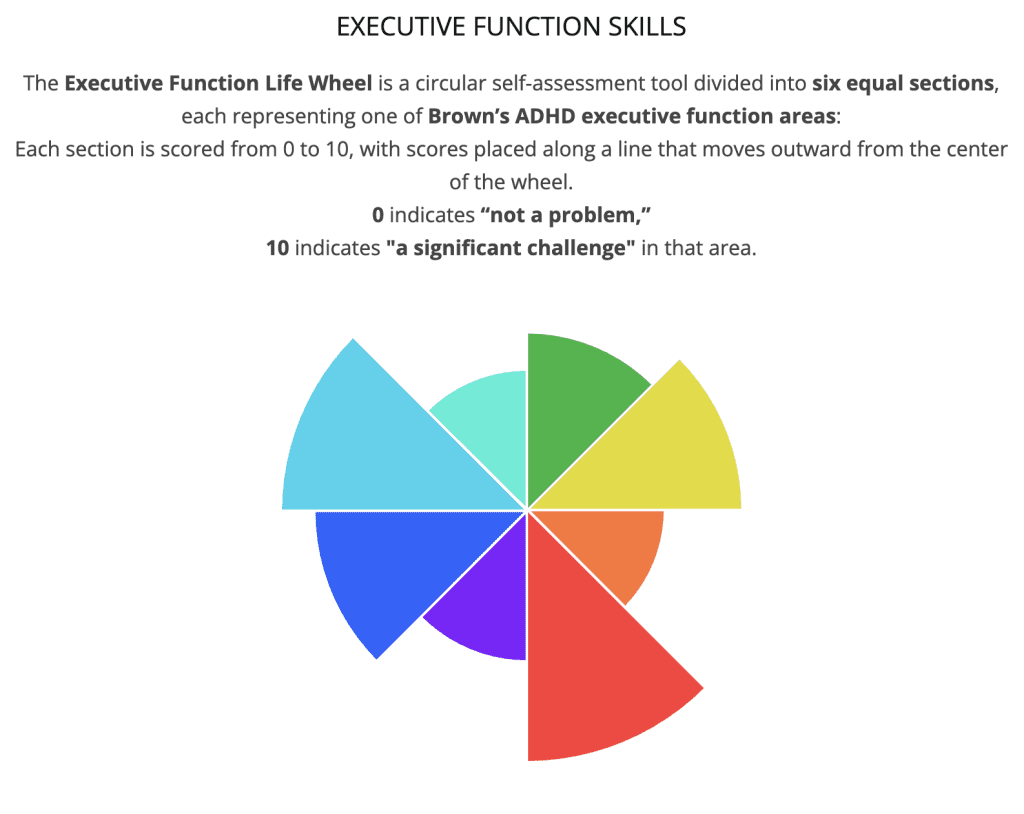
Your Executive Function Wheel gives you a visual map of your current strengths and
challenges across six key areas based on Brown’s ADHD Model. Seeing your results helps you:
- Understand which executive functions are most impacted right now
- Connect your challenges to nervous-system patterns, not personal shortcomings
- Identify what areas to work on first
- Track growth and improvements over time
- Begin the coaching process with clarity and self-awareness
This wheel is the starting point for meaningful, compassionate, and science-informed support.