
The Power of Coaching Supervision
Reflection, Restoration, and Sustainable Growth for Coaches
As coaches, we hold space for others—day after day, conversation after conversation.
Supervision is where we are held.
Coaching supervision offers a reflective, supportive, and generative space to pause, explore your practice, and reconnect with what matters most in your work as a coach. It is not about fixing or evaluating—it is about deepening awareness, strengthening integrity, and nurturing sustainable growth.
Supervision supports you not only as a professional, but as a human being in relationship with your work.
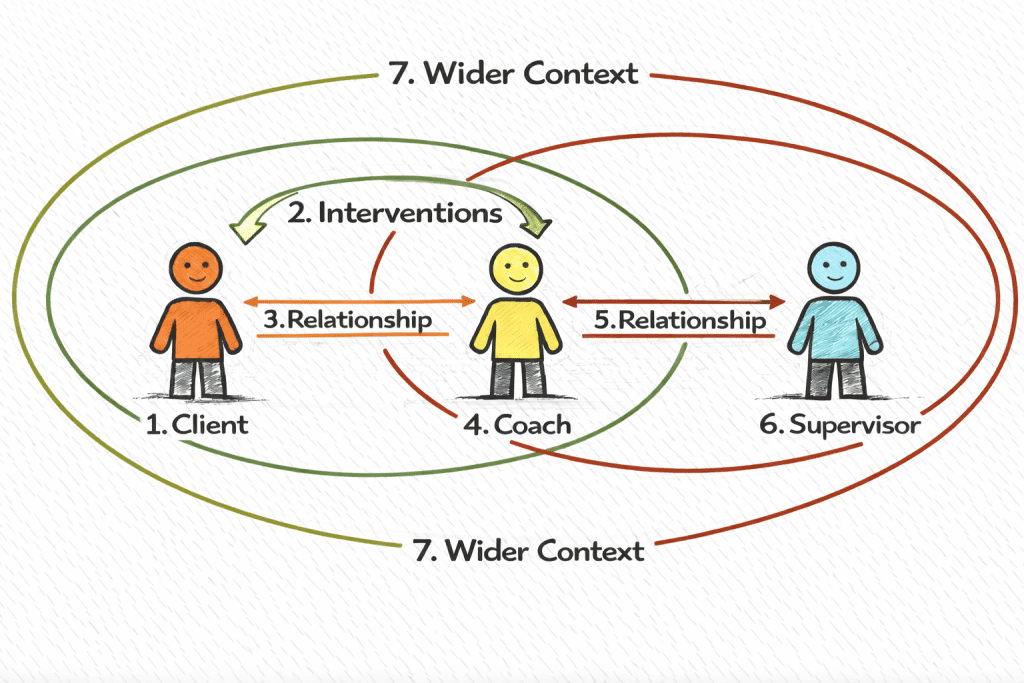
What Is Coaching Supervision?
Coaching supervision is a formal, collaborative process in which coaches (as well as leaders, mentors, and consultants) regularly reflect on their work with an experienced supervisor.
It provides a confidential space to:
- explore client work and professional challenges
- reflect on inner responses, beliefs, and patterns
- navigate ethical complexity with clarity and care
- support personal and professional development
Supervision is widely recognized as a cornerstone of ethical, effective coaching practice and is increasingly encouraged—and required—by professional bodies such as the International Coaching Federation (ICF).
Why Supervision Matters
Supervision serves three essential functions: reflection, restoration, and development.
Reflection & Self-Awareness
Supervision invites you to slow down and reflect on how you coach, how you relate to clients, and how your inner world influences your work. It helps uncover blind spots, assumptions, emotional responses, and habitual patterns—without judgment.
Restoration & Professional Support
Supervision provides restoration for:
- clients
- the coach
- the organization or system
It creates space to process emotional load, complexity, and ethical tension, helping restore clarity, perspective, and capacity. This supports grounded decision-making, healthy boundaries, and sustainable, responsible practice—especially in complex or demanding situations.
Ongoing Learning & Growth
Through supervision, coaches deepen their understanding of themselves, their clients, and the coaching relationship. It encourages curiosity, creativity, and continuous development beyond techniques or models.
Supervision as Self-Care
Supervision is also an act of professional self-care.
It offers a place to:
- process emotional load and responsibility
- restore perspective and resilience
- prevent burnout and isolation
- reconnect with purpose and values
Rather than carrying everything alone, supervision allows you to think, feel, and reflect in partnership.
How Supervision Works
Supervision is non-judgmental, non-prescriptive, and highly individualized.
Sessions typically involve:
- reflective dialogue around client work
- exploration of inner experiences and ethical questions
- inquiry into patterns, dynamics, and systemic influences
The agenda is co-created, based on what is alive and relevant for you.
There is no “right” way to do supervision—only a commitment to honest reflection and learning.
Supervision, ICF Credentialing & ACTC Requirements
The ACTC (Advanced Certification in Team Coaching) is an ICF credential for coaches working with teams and systems. It requires a higher level of professional maturity, ethical awareness, and reflective capacity.
- Coaching supervision is a mandatory requirement for both ACTC credentialing and renewal
- It supports the coach’s ability to work with complexity, systemic dynamics, and professional identity, beyond skill demonstration
- Proof of Attendance is provided to support credentialing, renewal, and documentation requirements.
For ICF credential renewal (ACC, PCC, MCC):
- Coaching supervision is not mandatory,
- yet it is recognized and accepted as part of the renewal process
- Supervision can count toward Core Competency Continuing Coach Education (CCE) credits
- Up to 10 hours may be applied within each three-year renewal cycle
- Proof of Attendance is provided to support documentation requirements.
This applies to individual or group supervision, whether received or delivered, when documented correctly.
Supervision vs. Mentor Coaching – What’s the Difference?
While both are valuable, they serve different purposes:
Mentoring
- focuses on credentialing requirements
- emphasizes ICF Core Competencies
- includes feedback on recorded sessions
- supports exam readiness
- learn more about Mentoring here
Coaching Supervision
- supports the coach as a whole person
- explores emotions, values, identity, and ethics
- reflects on the impact of the work on the coach
- strengthens long-term effectiveness and sustainability
Many coaches engage in both, at different stages or for different needs.
Pricing & Packages
For coaches looking to refine their skills, fulfill ICF mentoring or supervision requirements for ACC, PCC, MCC, ACTC, while deepening reflective professional development:
✔ $200 per hour
✔ 3-hour package – $570 ($190/hour)
✔ 5-hour package – $900 ($180/hour)
✔ 10-hour package – $1,700 ($170/hour)
✔ Led by certified mentors and supervisors with ICF MCC, ACTC, and supervision credentials
✔ Supports ICF credentialing, professional development, and reflective practice
✔ Proof of Attendance provided for credentialing or renewal purposes
An Invitation
Supervision is an invitation to pause, reflect, and reconnect—with your work, your values, and yourself as a coach.
If you are curious about supervision or wondering how it could support your development or credentialing journey, we invite you to explore it in conversation.
➡ Get started with supervision by scheduling a free discovery call